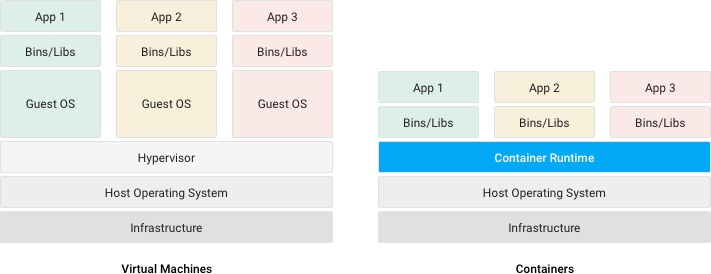
Virtual Machine vs. Container
Virtualization Concept #
Virtualization refers to abstracting physical components (HW devices) into logical objects, allowing a single device to operate as if it were multiple devices, or conversely, combining multiple devices to provide them to users as a single shared resource. This makes it a core technology for implementing cloud computing.
Computing resources subject to virtualization include processors (CPU), memory (Memory), storage (Storage), and networks (Network). By virtualizing servers or devices composed of these, a high level of resource utilization (physical servers 10-15%, virtualization 70% or more) and distributed processing capabilities can be provided.
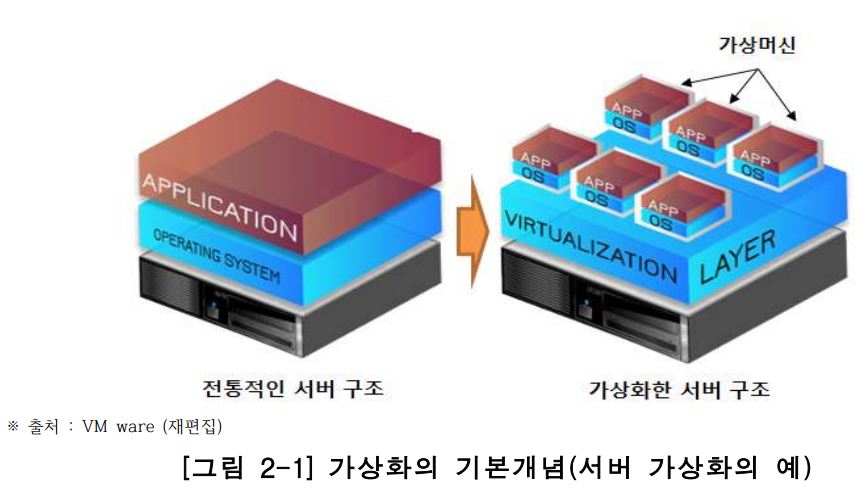
Virtual Machine #
A replicated computing environment implemented through virtualization.
Operational Objectives
- Running multiple types of operating systems or protocols simultaneously on a single piece of hardware.
- Dividing a single hardware resource among multiple users.
- Ensuring independence between divided systems through virtualization, without mutual interference.
Hypervisor #
An intermediary manager that manages shared computing resources and controls virtual machines.
Container #
Refers to a modular and isolated computing space or environment, which breaks free from system environment dependencies and operates stably.
Background of container technology: To solve the problem of developed programs causing various unexpected errors due to changes in the execution environment (= increased portability between computing environments).
Differences between Virtual Machines and Containers #
- Containers do not require a hypervisor and guest OS in virtualization.
- Instead, containers isolate processes at the OS level and run as modular program packages.
- Therefore, containers are lighter and faster than virtual machines.
- This makes it possible to run more applications more easily on a single physical server.