Kubernetes API Resources
API resources are a type of object that Kubernetes can manage.
There are various types, including pod, configmap, node, and so on.
When these resources are objectified (instantiated), they are called objects.
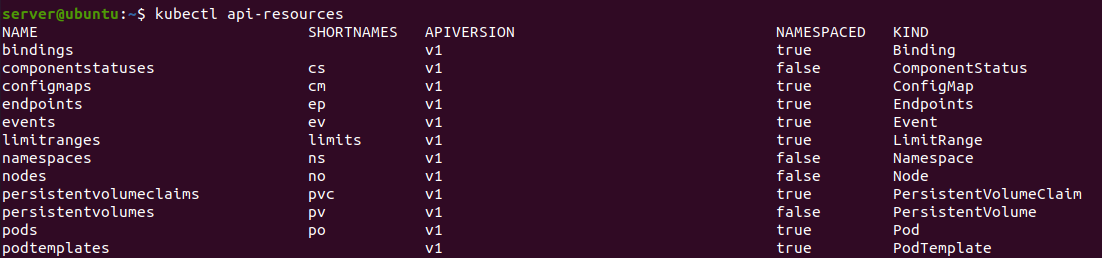
This command can print all the API resources currently supported by the Kubernetes cluster.
You can check at a glance which resources can be created and managed.
kubectl api-resources
The command below provides explanations about the specifications, uses, and purposes of these contents.
kubectl explain pod
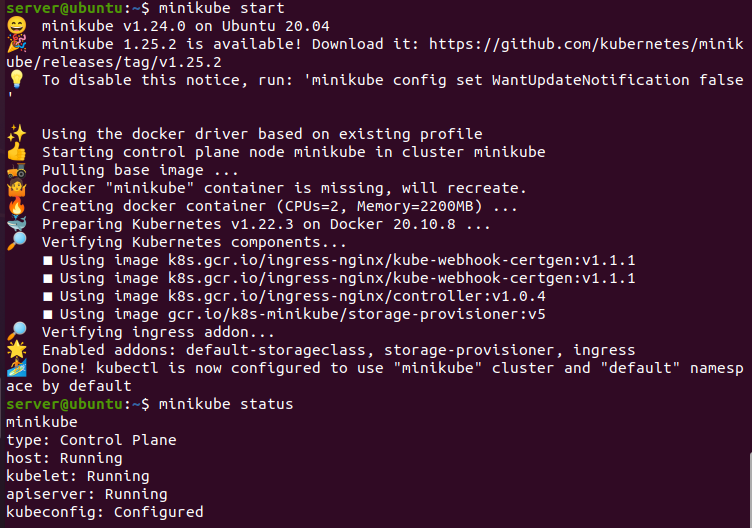
First, let's start Minikube. You'll see it run with very charming and cute emojis.
minikube start
You can also check the cluster's status by running the status command.
minikube status
When you run the api-resources command for the first time, a screen like the one below appears. Please note that the capture is not exhaustive; it appears as a very long list. You should examine the names and versions.
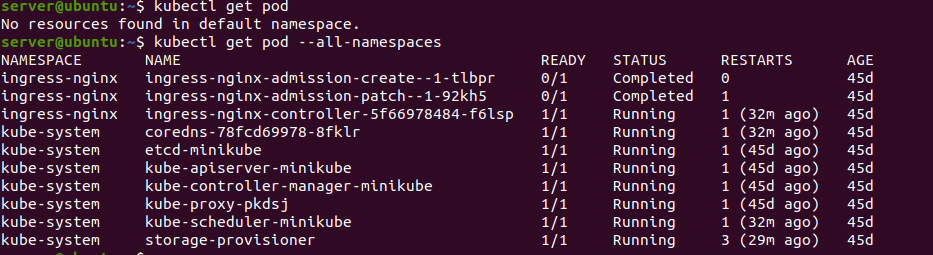
By entering the command below, you can check the status of all names in the current cluster using kubectl.
kubectl get name --all-namespaces
Various objects are managed in YAML format. The root keys include apiVersion to check which group and version it belongs to, kind to identify what type of resource the object is, metadata which contains identification information (name, namespace, labels, etc.), and finally spec which describes what data the object desires.
A unique point is that depending on the API resource, you might use other attributes instead of spec, such as data (for configmap, secret), rules (for Role), subjects, and so on.
Important contents within metadata include Labels and annotations. All Kubernetes objects can have this information even if not explicitly defined. However, Labels are for the purpose of identifying objects (who owns it, what type it is, what app it is, etc.), and since internal features provide a Label Selector function, it's generally important to set them for identification. annotations values are slightly different; they are not for identification but are used for configuration purposes to determine how an object should be processed (read by Kubernetes add-ons).