Doker (Doker)
Doker (Doker) #
- One of many projects that support container technology
- Container technology existed before, but it became widely known because of Doker.
- De facto standard for container technology
- Ranked 2nd most popular cloud open source in 2014, announced by the Linux Foundation
- Usable on various operating systems
- Simplifies building, deploying, and running by packaging not only applications but also dependencies and file systems.
- Virtualization using kernel features like Linux namespaces and cgroups
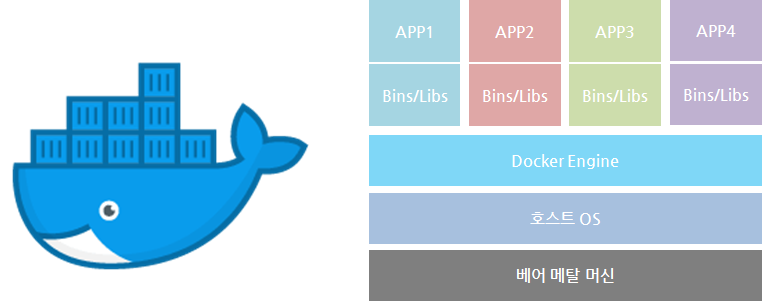
Doker can be used with various cloud service models.
- Image: A single file created after installing necessary programs, libraries, and source code.
- Container: A virtual environment created by isolating and running an an image in an independent space.
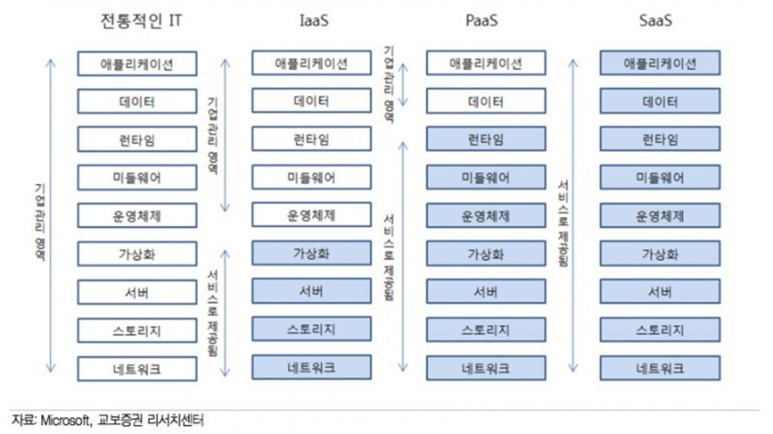
Containers Solve It! #
- Software components running on the same system often conflict or have various dependencies.
- Containers are a technology that isolates each microservice using virtual machines.
- Containers can run very fast because they don't implement all hardware like virtual machines.
- If a process issue occurs, the entire container must be adjusted, so it's best to run a single process per container.
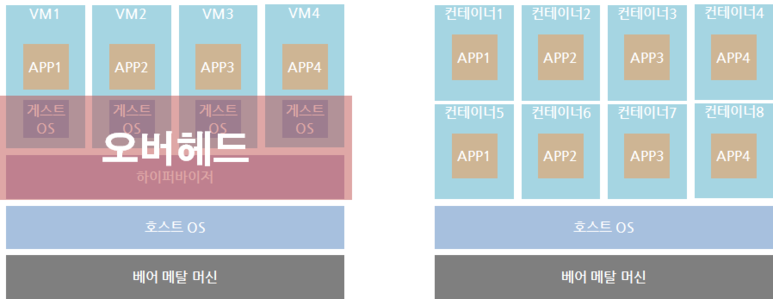
By utilizing space not needed by the hypervisor, more resources can be invested in applications.
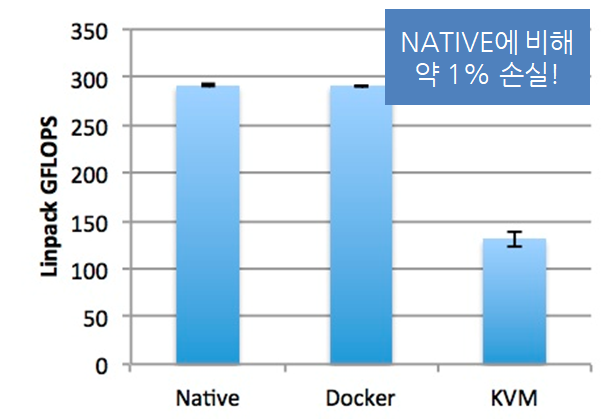
Container Performance Comparison #
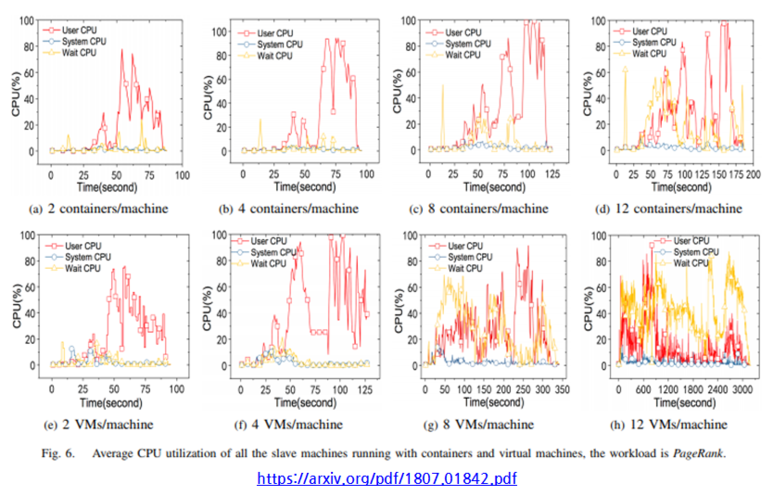
GFLOPS (GPU Floating point Operations Per Second) for Native, VM, and Container
GFLOPS (GPU Floating point Operations Per Second) is a unit primarily used to numerically represent computer performance.
Technologies for Container Isolation #
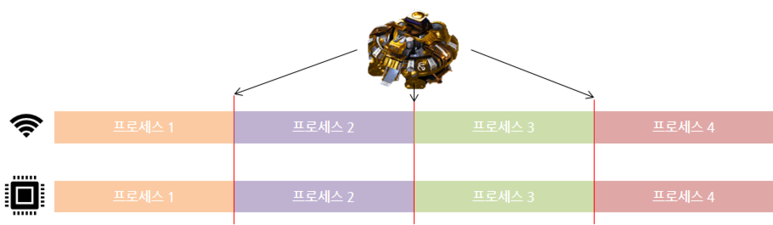
Linux Namespaces: Provides each process with an independent view of the system for file system mounts, networks, users, hostnames, etc.

Linux Control Groups: Limits the amount of resources a process can consume.
Limitations of Doker #
As services grow, the number of containers to manage increases rapidly. Even with Doker, management becomes difficult, and deployment and container placement strategies like scale-in and scale-out are challenging.