Clustering (Active Clustering, Standby Clustering)
Clustering #
One of the database distribution techniques that involves having multiple DB servers to prepare for when one server goes down.
Active Clustring #
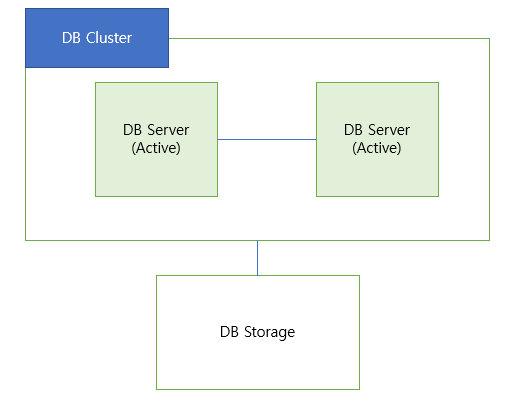
Multiple DB servers are configured, and each server is kept in an Active state.
Advantages #
- Even if one server goes down, other servers immediately take over its role, so there is no service interruption.
- CPU and memory utilization can be increased.
Disadvantages #
- If a single storage is shared, a bottleneck may occur.
- Operating multiple servers simultaneously incurs higher costs.
Standby Clustering #
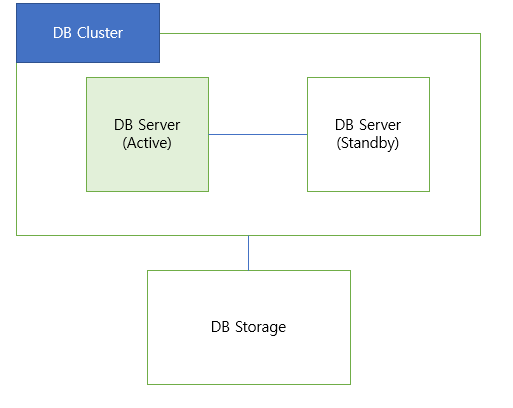
Only one server is operated, and the remaining servers are kept in a Standby state. If the operating server goes down, the Standby server is switched to an Active state.
Advantages #
- It costs less compared to Active-Active clustering.
Disadvantages #
- When a server goes down, time is required to switch the Standby server to an Active state.