How Spring Data JPA Works
Spring Data JPA is a Spring Data module that helps developers easily implement JPA-based data access layers. It's a module commonly used with the Spring Framework for development utilizing RDB-based databases.
Spring JPA is a module that extends Hibernate's functionality to fit the Spring Framework. Therefore, its basic structure and operation are based on Hibernate's implementation.
Persistence Context #
A term frequently encountered with JPA is "Persistence Context," often referred to as the 1st-level cache. It manages and caches entities loaded from or to be loaded into the database. It has a 1:1 relationship with an EntityManager or Session. A Session is an implementation of an EntityManager and is created when a connection to the database is established.
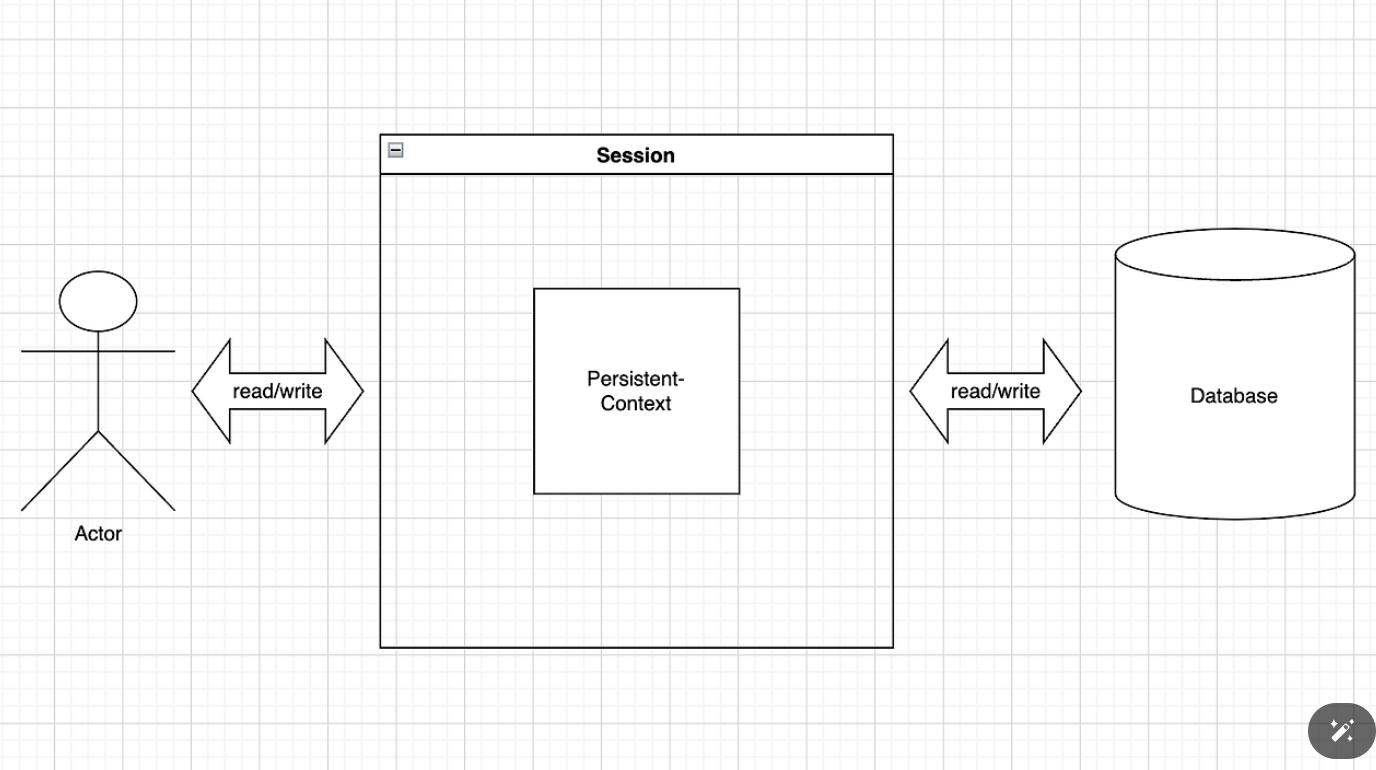
This explanation is based on
SessionImpl, the implementation of Sessions/EntityManager, andStatefulPersistenceContext, the implementation of PersistenceContext.
Operations that occur when jpaRepository.save() is called #
What operations take place when JpaRepository.save() is called?
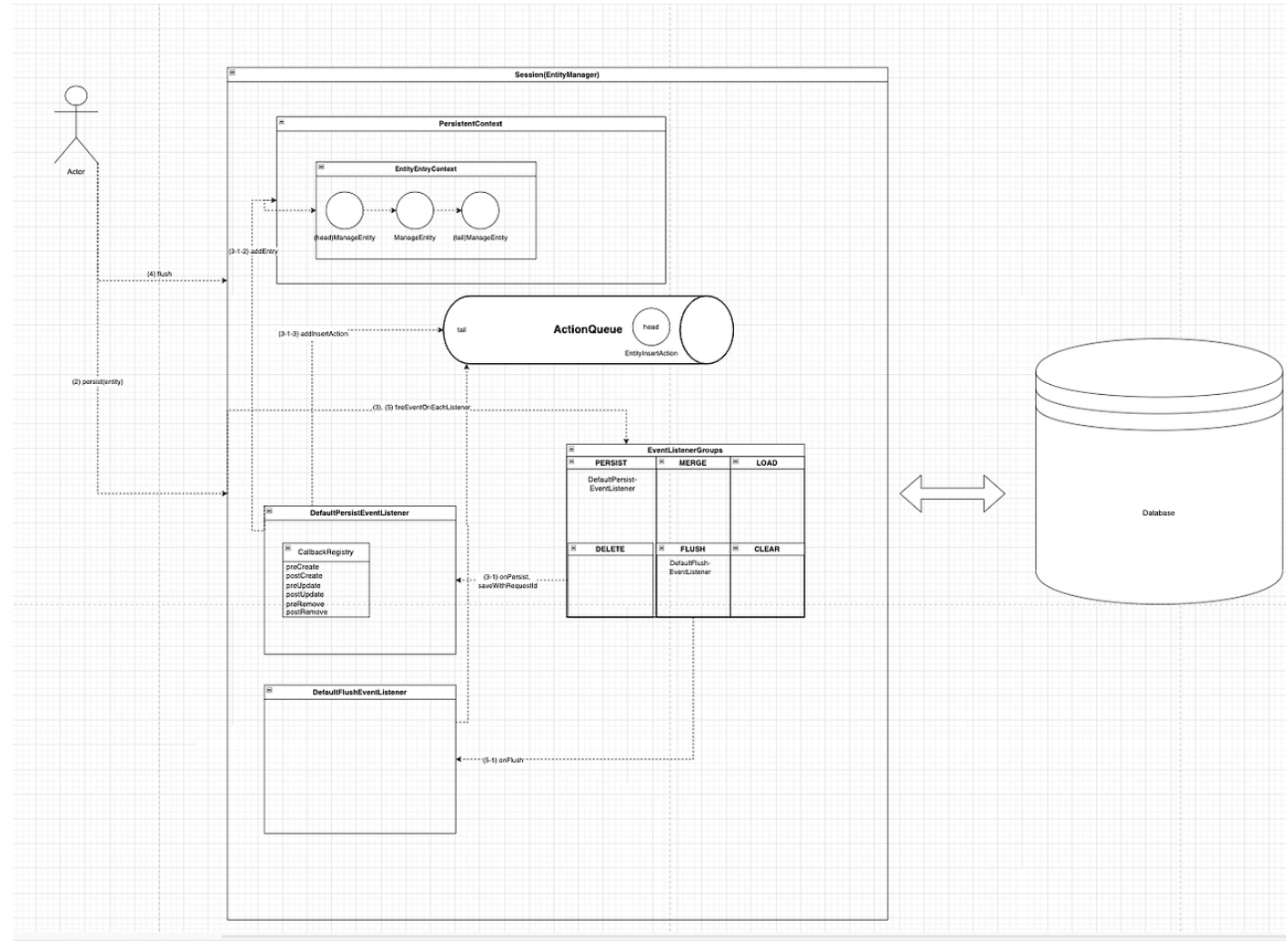
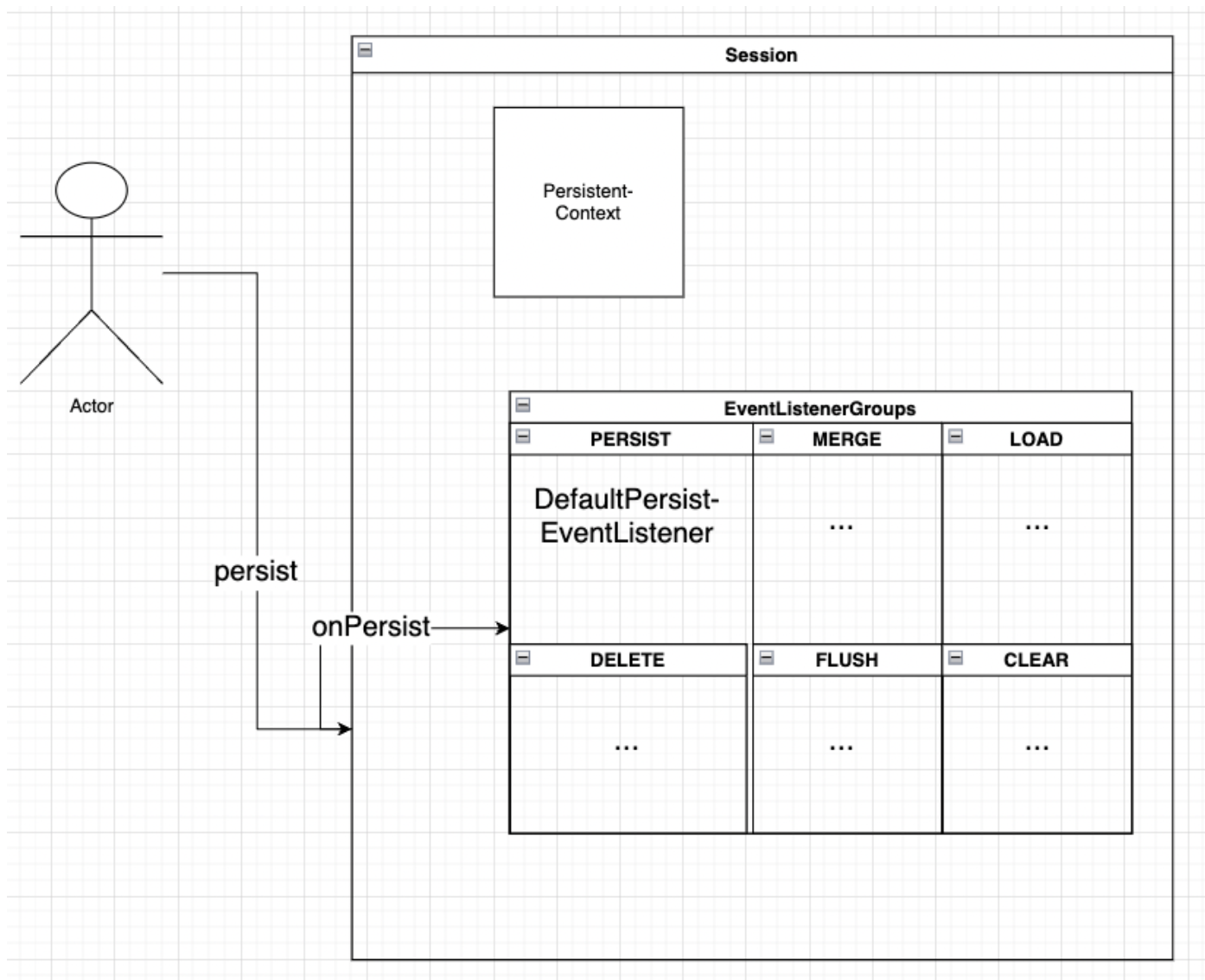
When this method is called to save a newly created entity, persist() of SessionImpl is invoked. Hibernate operates on an event-driven model, where each event has an EventListener Group and default listeners are registered.
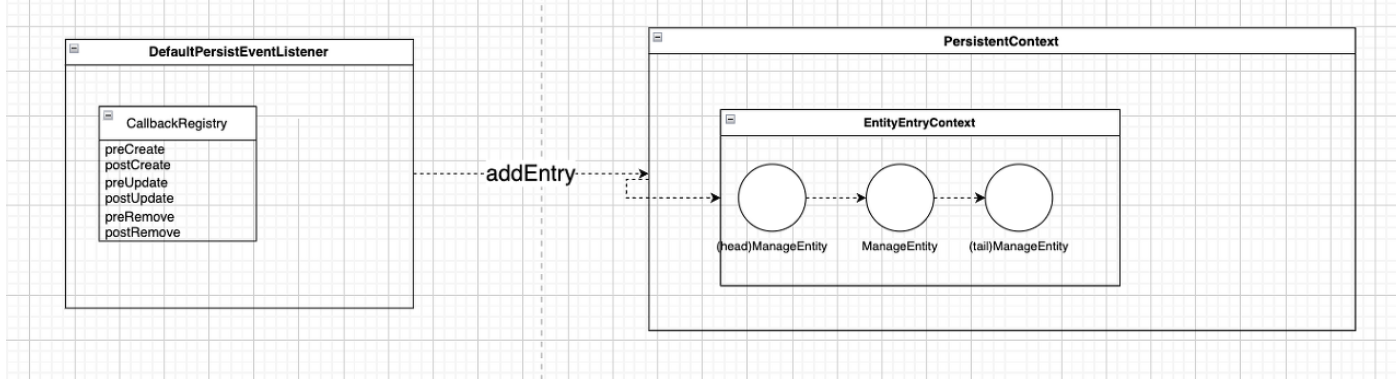
persist is also published as an event, and DefaultPersistEventListener is registered as the default listener. When persist is called, it's passed as a PersistEvent, an AbstractEvent implementation, which then calls onPersist of DefaultPersistEventListener within the persist event group. The DefaultPersistEventListener performs the entity persistence operation. Persistence can be understood as an entity becoming a ManagedEntity that is managed within the persistence context.
Persisted entities are managed in a list data structure within the EntityEntryContext. The most recently persisted entity is at the tail, and the first persisted entity is at the head.
Next, for a new entity to be persisted, a database insert must occur. At this point, the insert command is not executed immediately; instead, an EntityInsertAction is enqueued into the ActionQueue. In some cases, it might be executed immediately.
The ActionQueue contains actions such as INSERT, UPDATE, and DELETE. The secret to Spring JPA's lazy writing is precisely this ActionQueue.
Once all persistence operations are complete, Session's flush is called. This passes a FlushEvent to the Flush Event Group, which then calls onFlush of DefaultFlushEventListener. The DefaultFlushEventListener executes executeActions of the ActionQueue, running all actions contained within the ActionQueue in a batch. The execute function of each Action is run, and an INSERT/UPDATE/DELETE statement is generated and executed depending on the type of Action.
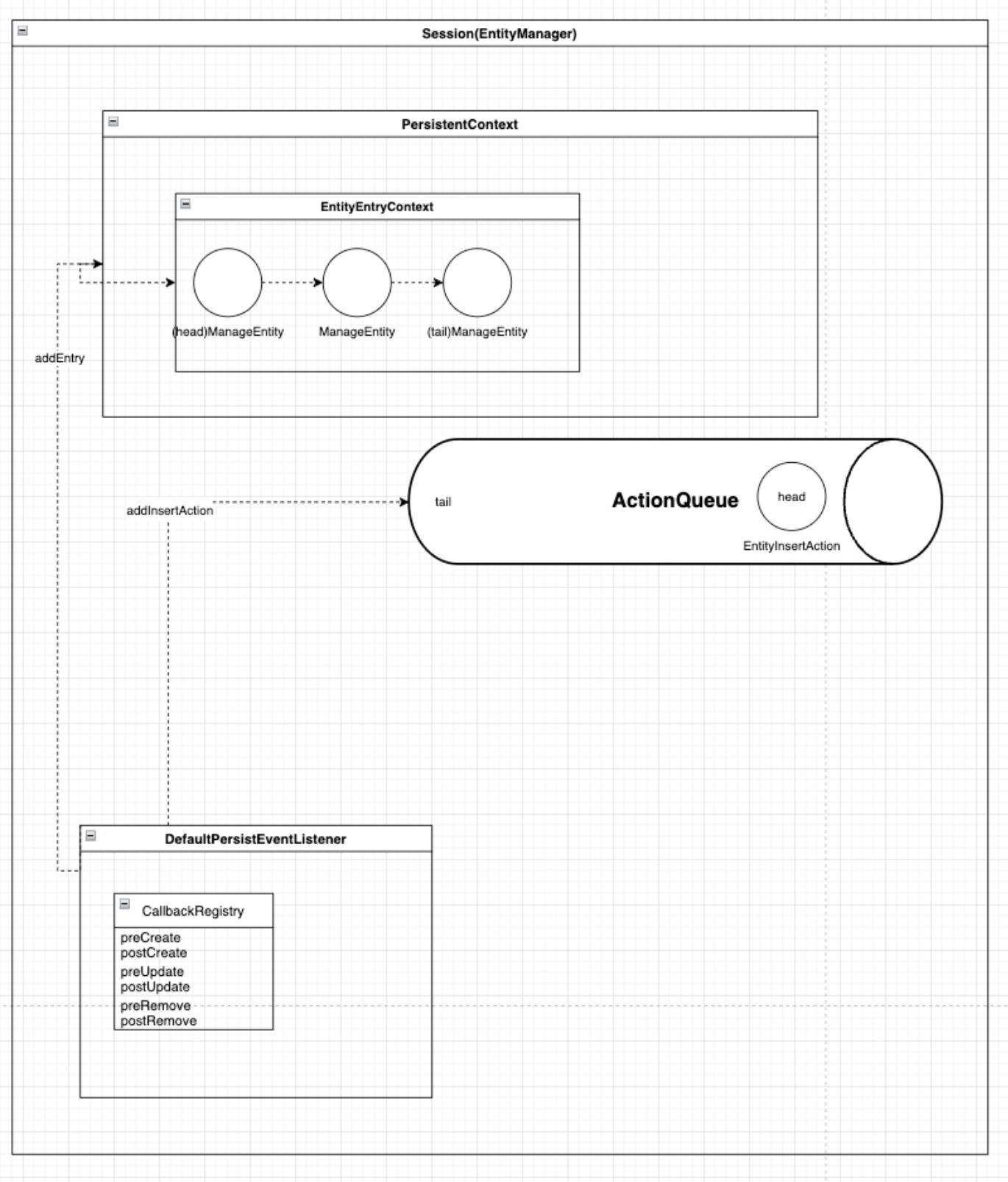
In summary:
- When connected to the database, a session or entity manager is created.
- An event to persist a new entity is published.
- The entity is registered as a managed entity within the session's persistence context.
- An
EntityInsertActionis added to theActionQueue. - A
Flushevent is published. - Actions in the
ActionQueueare executed in a batch. - An INSERT statement is executed.