Kotlin Scope Functions
Scope Functions #
Scope functions are special functions used to define the scope of an object. They operate similarly to methods in object-oriented programming, but their purpose is to limit the scope of an object.
Kotlin provides the following five scope functions: let, apply, run, also, with
Let's refer to this diagram.
let #
The let function takes an object as an argument, executes a lambda expression, and returns the result. For example, the code below executes println if nullableVariable is not null.
nullableVariable?.let { value ->
    println(value)
}
The let function is useful for handling null values. For example, the code below returns defaultValue if nullableVariable is null.
val result = nullableVariable?.let { value ->
    value
} ?: defaultValue
apply #
The apply function takes an object as an argument, executes a lambda expression, and returns the object itself. For example, the code below creates a Person object and initializes its field values.
val person = Person().apply {
    name = "esperer"
    age = 18
    address = "우리집"
}
run #
The run function takes an object as an argument, executes a lambda expression, and returns the result. For example, the code below creates a Person object, initializes its field values, and then returns the result of executing the displayName function.
val result = Person().run {
    name = "esperer"
    age = 18
    address = "우우리이집"
    displayName()
}
also #
The also function takes an object as an argument, executes a lambda expression, and returns the object itself. For example, the code below creates a Person object, initializes its field values, then executes the println function, and returns the object itself.
val person = Person().also {
    it.name = "esperer"
    it.age = 10
    it.address = "12myhouse"
    println(it)
}
with #
The with function takes an object as an argument, executes a lambda expression, and returns the result. For example, the code below creates a Person object, initializes its field values, and then returns the result of executing the displayName function.
val result = with(Person()) {
    name = "esperer"
    age = 18
    address = "12asfasdfmyhouseSt"
    displayName()
}
Characteristics, Differences, and Use Cases of Each Scope Function #
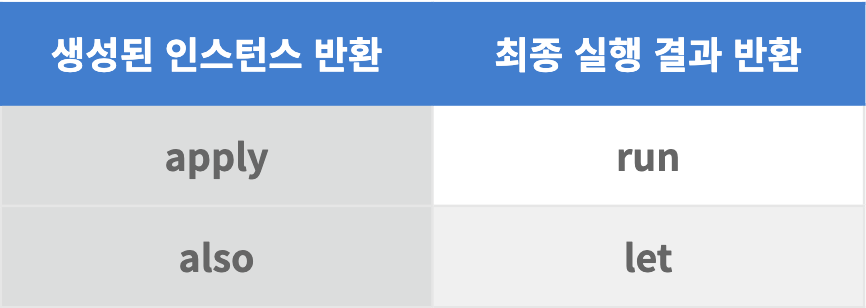
apply: A function that creates a scope for initialization tasks before a new instance is created and assigned to a specific variable. Its characteristic is that after all commands are executed, the commands are applied, and the newly created instance is returned.run: The clear difference fromapplyis that it returns the result of executing commands within the scope, not the created instance. Therefore, it can be used when you need the value of an already created instance or a specific calculated value derived from it.with: Somewhat anticlimactically,withonly differs fromrunin appearance; there are no operational or characteristic differences.also/letandapply/runhave consistent behavior (return values) with the functions as shown in the diagram above. However, a difference lies in the use ofit.
In terms of scope functions performing specific operations within a particular object context, also and let seem to be the best scope functions. Personal opinion.
You should use the appropriate scope function according to the situation and purpose.