Hosting
What is Hosting? #
- It means renting and using a certain service.
- Then what about web hosting? It literally means renting an external server to use its functions. There are types of hosting such as web hosting, server hosting, and cloud hosting.
Web Hosting #
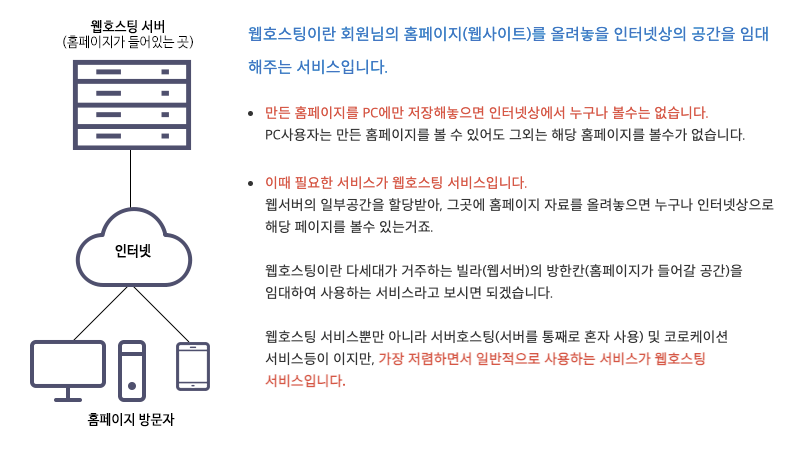
- For example, let's say you've created a web page using code like HTML or CSS. Just because you've made a web page doesn't mean anyone can access your site. Only after going through the deployment process and connecting a domain does a single web page truly become a website.
- This deployment process is entrusted to a specialized company. Of course, you could do this yourself, but it's quite difficult for an individual to purchase and set up a server.
Server Hosting #
What's the difference between server hosting and web hosting?
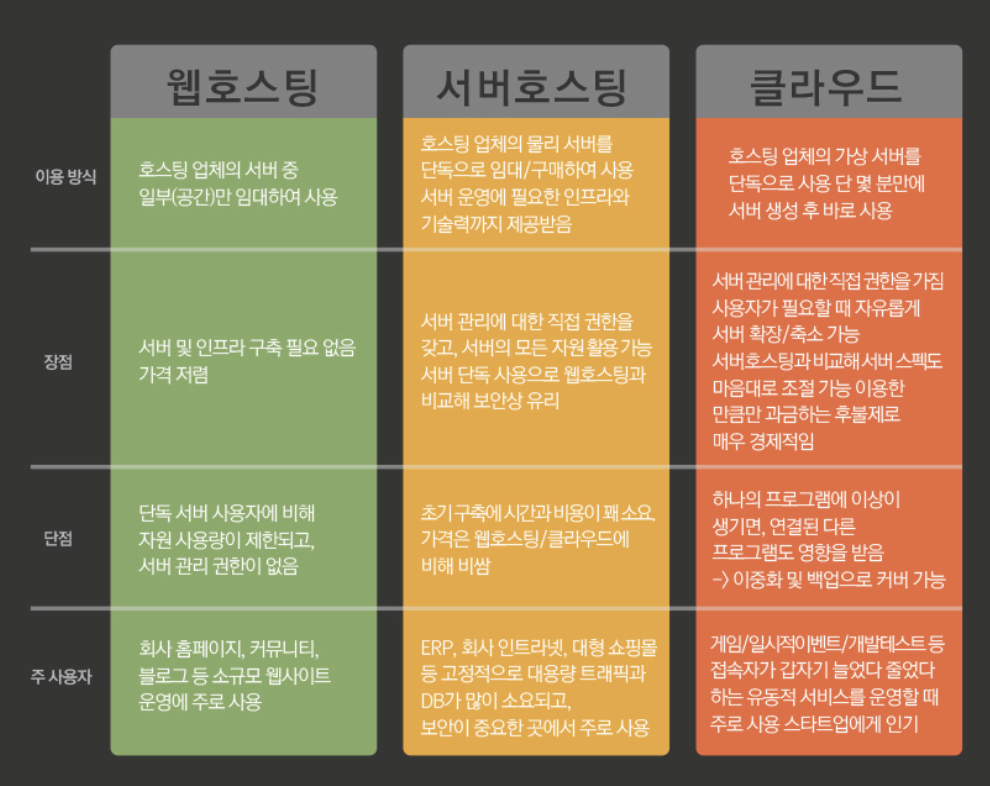
- Web Hosting: A service that rents only
a portionof a server. - Server Hosting: You can purchase an entire server and receive the infrastructure and technical expertise needed for server operation.
Web hosting is primarily used for small-scale websites. Server hosting, on the other hand, provides direct control over server management and exclusive use of the server, which is advantageous for security. However, it has the disadvantage of requiring more time and cost in the initial setup phase compared to web hosting. It's typically used for corporate intranets, large online shopping malls, and other environments with consistently high traffic and heavy database usage.
Cloud Hosting #
Cloud hosting is a hosting method that combines the advantages of both web hosting and server hosting, and it has recently gained significant attention. Various services exist, such as Amazon's EC2 and Google's Cloud Platform. Its advantages include the ability for anyone to create and manage a server within 10 minutes with just a few clicks from their desk, and its flexibility in handling traffic fluctuations, making it convenient for temporary events or environments with dynamic infrastructure. While there are disadvantages, the evolution of cloud hosting is gradually eliminating them.
Comparison #
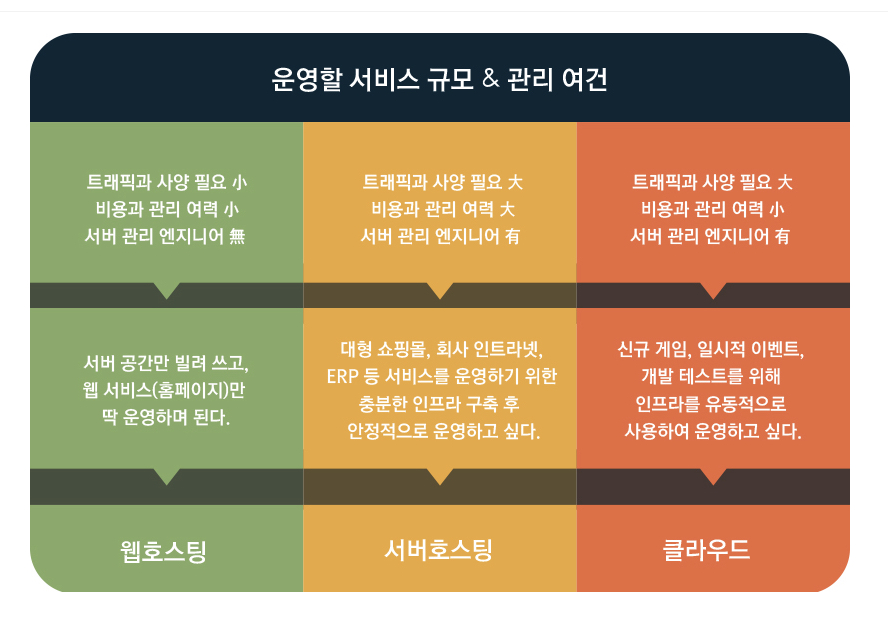
- Personal blogs, places requiring small-scale traffic: Web Hosting
- Places with high traffic and DB usage that also require server management infrastructure: Server Hosting
- Services that can flexibly respond to traffic changes and build servers quickly: Cloud Hosting